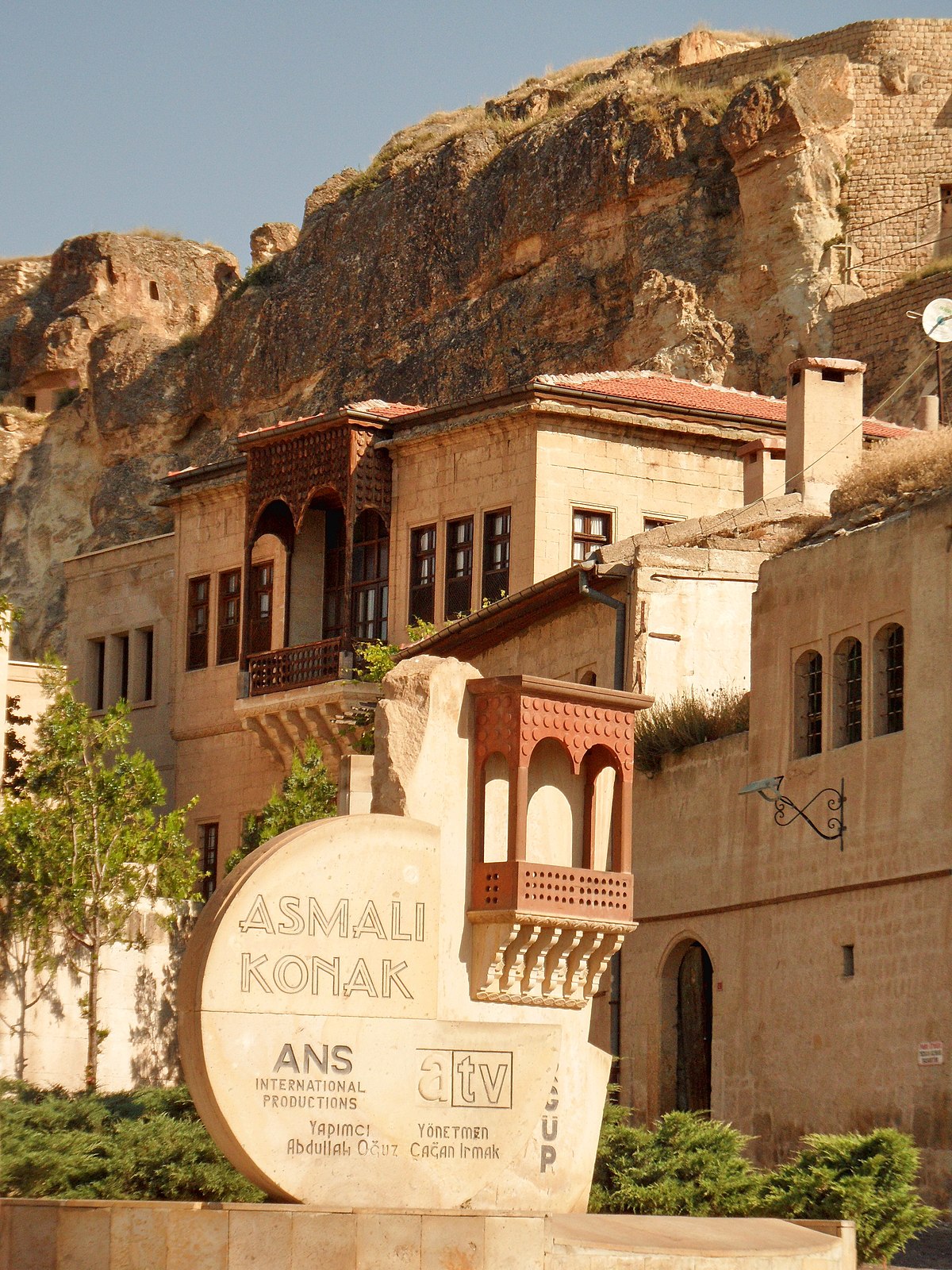



The museums to visit in Cappadocia hold very significant value. Cappadocia is one of Turkey’s most magnificent regions in terms of history and natural beauty. With so many historic sites and natural wonders to explore, we could fairly call this region a museum in its own right. It would be no exaggeration to say that every corner of Cappadocia — home to numerous churches, mosques, historic bridges, valleys, and countless other beauties — is like paradise.
We also recommend staying at the MDC Hotel during your trip.
Göreme Open Air Museum
Also known as the Göreme Ruins, the museum was regarded as a center of learning until the 13th century. This is because Saint Basil, Bishop of Caesarea, came to this area in the 4th century AD and began to spread his knowledge to the people; before long he was training his own students, thus giving rise to monastic life in the valley. Göreme is known as a rock settlement, and within it churches, chapels, refectories, and living areas were created by carving into the rock. The sections that can be visited at the Göreme Open Air Museum are the Chapel of Saint Basil, the Chapel of Saint Barbara, the Monastery of the Monks and Nuns, the Dark Church, the Tokalı Church, the Çarıklı Church, the Elmalı Church, and the Snake Church.
In these churches you can see the geometric decorations used in the earliest years of Christianity.
Avanos Hair Museum
The most curious place among the museums to visit in Cappadocia is the Avanos Hair Museum. It ranks 6th on the list of “The 15 Most Interesting Museums in the World” published by the American site ABCNews.com. The museum has also entered the Guinness Book of Records.
So what makes the Avanos Hair Museum so interesting?
It all began with a love story. A French woman came to the workshop of the museum’s owner, master potter Galip Körükçü. With each passing day, the emotional bond between Master Galip and the French woman grew stronger. About 3 months later, before returning to her country, the French tourist wanted to give Master Galip a gift to remember her by, and she gave him a lock of her own hair. Master Galip hung the hair on the wall. Women who heard the story of the lock of hair on the wall came to the workshop and donated locks of their own hair. And so the Hair Museum came into being.
Some time later, the French woman came back to Istanbul and was shocked by the scene she encountered. However hard she searched, she could not find her own lock of hair. It is said that Master Galip hid the French woman’s lock of hair in a place known only to himself.
To this day, the first place that comes to mind at the mention of Avanos is the Hair Museum.
The names, surnames, and addresses of the women who donated their hair to the museum are attached to the locks. To protect this personal information, photography is prohibited in the museum.
Zelve Open Air Museum
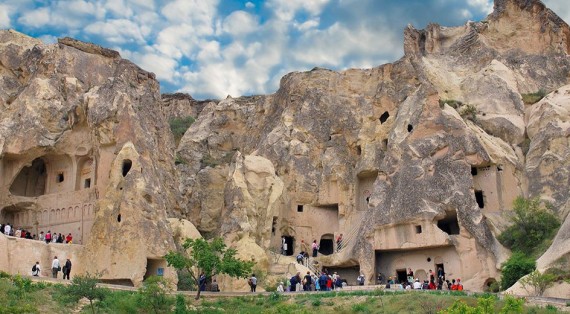
It is home to many fairy chimneys with pointed tips and broad bodies. At the same time, the churches within the museum add still more to its value. The craftsmanship worked into the houses at the Zelve Open Air Museum is nothing short of a masterpiece. The features of the Fish Church, the Grape Church, and the Deer Church are likewise beautiful enough to be well worth seeing.
Underground Ceramics Museum
Everyone knows that the Avanos area of Cappadocia has had a pottery tradition since the days of the Hittites. This craft, passed down from father to son, is one of the greatest treasures that make Avanos so special.
Founded in the spirit of modern museology within the district of Avanos, the Güray Museum is the largest museum in the area. It contains social event spaces, exhibition halls, and many other service facilities.
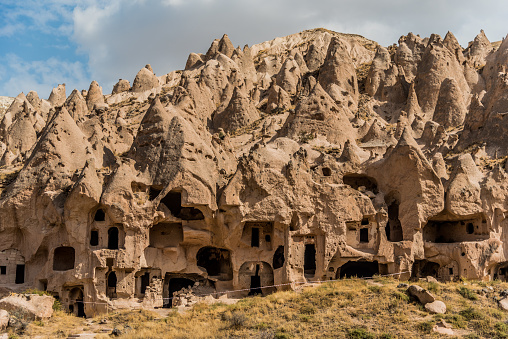
It was carved into an area of roughly 1,600 m², 20 meters below the ground. It stands as the first and only underground museum in the world.
It consists of three sections: the Ancient Works Hall, the Modern Works Hall, and the Exhibition Hall.
While the museum welcomes visitors during the day, in the evening hours it hosts seminars, dinner meetings, dance performances, whirling dervish performances, concerts, and many other events in its dedicated hall, which has a capacity of around 400 people.
Güray Ceramics and Pottery has been carrying out its craft here since 1843, magnificently showing us what pottery is all about.
Ürgüp Museum
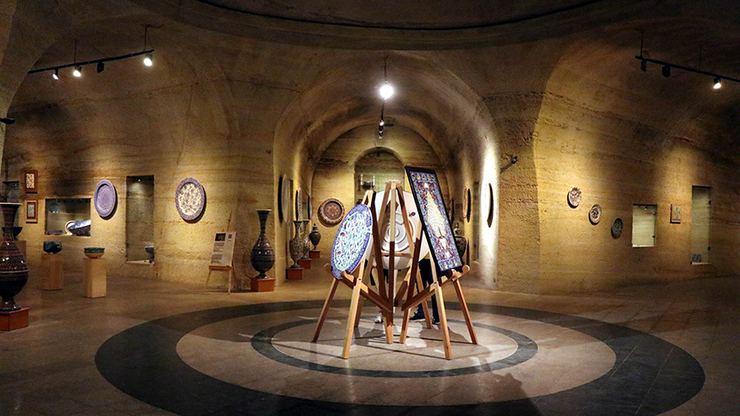
Located on Temenni Hill, the Ürgüp Museum has a single-domed structure. The museum opened its doors to visitors in 1971.
At the entrance of the museum, a 10-million-year-old female mammoth fossil, found during excavations at Mustafapaşa, is on display.
The museum’s exhibition hall contains handmade objects from the Bronze Age and the Hellenistic and Roman periods.
Ortahisar Culture Center
Once a hotel, the building was restored in 1954 and turned into a museum. It began operating in 2002, and the traditional ways of life of the local people have been recreated here in sculpted scenes.
Grape-molasses making, carpet and kilim weaving, the asking for a bride’s hand, the henna night, the bridal room and the village room, and fabric printing techniques are all brought to life.
Cappadocia Art and History Museum
This is a roughly 170-year-old mansion in the Mustafapaşa area of Cappadocia. Also known as the “Doll Museum”, the mansion houses dolls that are all handmade. The dolls on display were made by Sibel Radiye Kül with her own hands, and the museum contains around 3,000 of them.
The handmade dolls take as their subjects epics and legends from Turkish history — the most important feature that sets this museum apart from all the others.
Asmalı Konak
Among the museums to visit in Cappadocia there is even a television-series museum. We know it as the place where the series Asmalı Konak was filmed — indeed, the series takes its name from this mansion. Now serving as a museum, the mansion contains the rooms where the series was shot, its courtyard, and the costumes the actors wore during filming.
Although it goes by the name Asmalı Konak, this is actually a Greek house — the Old Greek House. The mansion in question was built in 1887.