


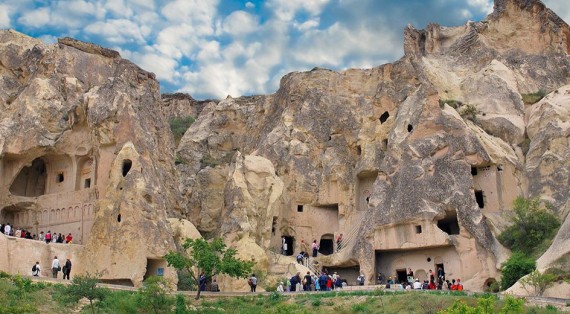
The Göreme Open Air Museum, also known as the Göreme Ruins, was regarded as a center of education until the 13th century. This is because Saint Basil, Bishop of Caesarea (Kayseri), came to the region in the 4th century AD, began to share his teachings with the people and, in time, started to train his own students, giving rise to monastic life in the valley. Göreme is a rock-cut settlement, and its churches, chapels, refectories and living quarters were all carved directly into the rock. The sections open to visitors at the Göreme Open Air Museum are the Chapel of Saint Basil, the Chapel of Saint Barbara, the Monastery of Nuns and Monks, the Dark Church, the Tokalı (Buckle) Church, the Çarıklı (Sandal) Church, the Elmalı (Apple) Church and the Yılanlı (Snake) Church. These churches feature the geometric decorations used by Christians in the early years of Christianity. The Göreme Open Air Museum is an absolute must-see.
If you need accommodation during your visit, MDC Hotel is an excellent choice.
Chapel of Saint Basil
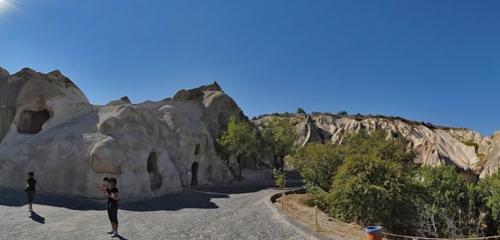
Located at the entrance of the museum, this chapel dates back to the 11th century. It contains a portrait of Jesus, along with depictions of the Virgin Mary and the childhood of Jesus. You can also see depictions of two female saints as well as Saint George, Saint Demetrius and Saint Theodore.
Chapel of Saint Barbara
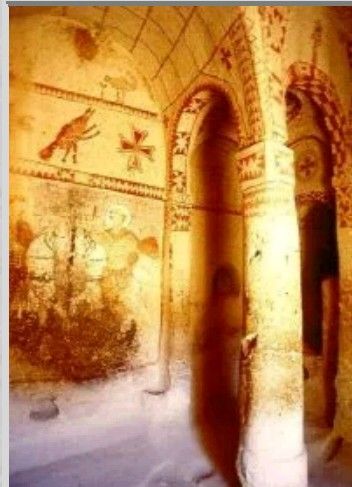
The chapel is located behind the rock block that also houses the Elmalı (Apple) Church. The motifs inside were painted in red. Its dome and walls are richly decorated with geometric motifs, among which military symbols and mythological animals can also be seen. There are also depictions of Saint George and Saint Theodore fighting a dragon on horseback, as well as of Saint Barbara.
Monastery of Nuns and Monks
Also known as the Nunnery, its first floor holds a kitchen, a refectory and rooms, while the second floor houses a chapel. The chapel is in ruins but can still be visited. The floors of this three-story monastery were connected by tunnels, and rolling stone doors were used to seal off the tunnels in times of danger. In the Monastery of Monks, on the right, the passages between the floors have unfortunately been closed off due to erosion, so only a few rooms on the ground floor can be visited.
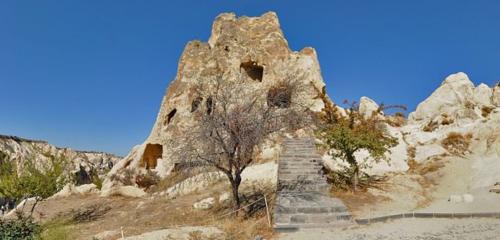
Dark Church
The church owes its name to the fact that it receives very little light, through a single tiny window in its narthex. This lack of light kept the frescoes inside from fading, and they remain remarkably vivid to this day. Believed to have been built in the late 11th or early 12th century, the church is richly decorated. Its walls feature scenes such as the Deesis, the Annunciation, the Journey to Bethlehem, the Nativity, the Adoration of the Magi, the Baptism, the Raising of Lazarus, the Transfiguration, the Entry into Jerusalem, the Last Supper, the Betrayal, the Crucifixion, the Descent into Hell, the Women at the Empty Tomb, the Blessing and Commissioning of the Apostles, the Ascension, the Hospitality of Abraham and the Three Hebrew Youths in the Furnace.
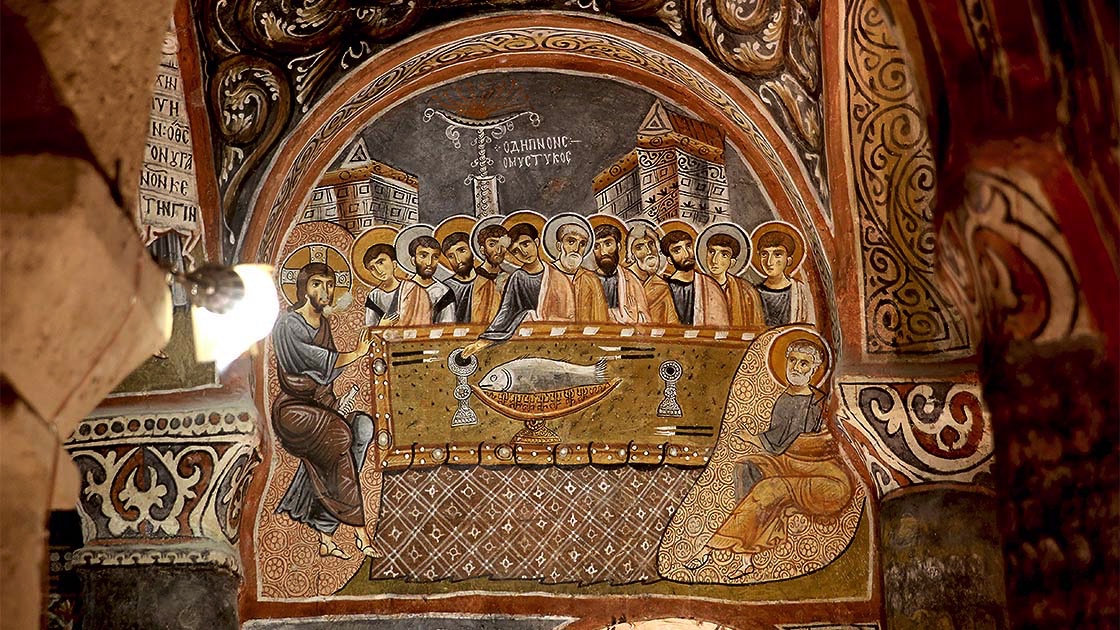
Tokalı (Buckle) Church
Believed to have been built in the late 10th or early 11th century, the Tokalı Church is the oldest rock-cut church in the area and consists of four chambers: the single-nave Old Church, the New Church, the church beneath the Old Church, and the side chapel to the north of the New Church. On its walls you can see scenes from the life of Saint Basil, depictions of many saints, and the miracles and life of Jesus.
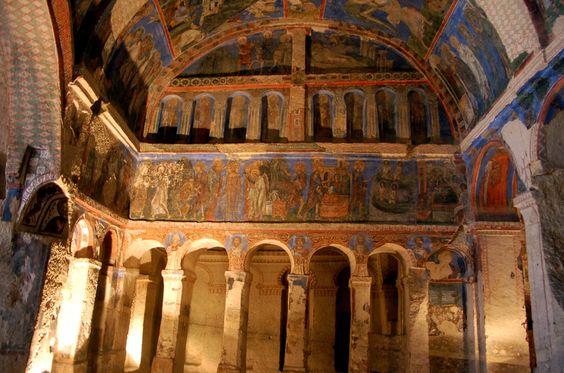
Çarıklı (Sandal) Church
The church is best known for its scenes of the Crucifixion and the Deposition from the Cross. Its striking resemblance to the Elmalı (Apple) Church and the Dark Church is another notable detail. According to legend, the church owes its name to the footprints beneath the scene of the Ascension of Jesus.
Elmalı (Apple) Church
The church is entered through a tunnel opening from the north. It is estimated to have been built in the mid-11th or early 12th century. The crosses and motifs painted in red on its walls are another striking detail.
Yılanlı (Snake) Church
The church takes its name from the wall paintings of four sinful, naked women being attacked by snakes. The inscription of the first woman has been destroyed, so her sin remains unknown. The second woman is bitten on the breast by snakes for not nursing her child; the third is bitten on the mouth for lying; and the fourth on the ears for being disobedient. The Yılanlı Church dates from the 9th century.

