

The churches to visit in Cappadocia are remarkably numerous. It is believed that there are close to 400 churches in Cappadocia. Everyone knows that Cappadocia, with its historic texture and magnificent scenery, has a beauty that leaves every visitor in awe. Having hosted many civilizations, Cappadocia makes you feel as if you have travelled back in time when you go and see it, and most of its churches date from very early periods. Some of the churches were even carved into the fairy chimneys, which is astonishing in itself. While some churches have managed to survive to the present day without losing their character, others, unfortunately, have not remained as intact. For those curious, here is the list of churches to visit in Cappadocia:
The Dark Church (Karanlık Kilise)
This is the church that attracts the most attention among the churches to visit in Cappadocia. It was named the Dark Church because it receives very little light, coming only through a tiny window in its narthex. The lack of light has kept the frescoes inside from fading, allowing them to remain vivid to this day. Believed to have been built at the end of the 11th century and the beginning of the 12th century, the church features rich decoration. It contains scenes drawn from scripture such as the Deesis, the Annunciation, the Journey to Bethlehem, the Nativity, the Adoration of the Magi, the Baptism, the Raising of Lazarus, the Transfiguration, the Entry into Jerusalem, the Last Supper, the Betrayal, Jesus on the Cross, the Descent of Jesus into Hell, the Women at the Empty Tomb, the Blessing and Commissioning of the Apostles, the Ascension of Jesus, the Hospitality of Abraham, and the Three Hebrew Youths in the Furnace.
Tokalı Church
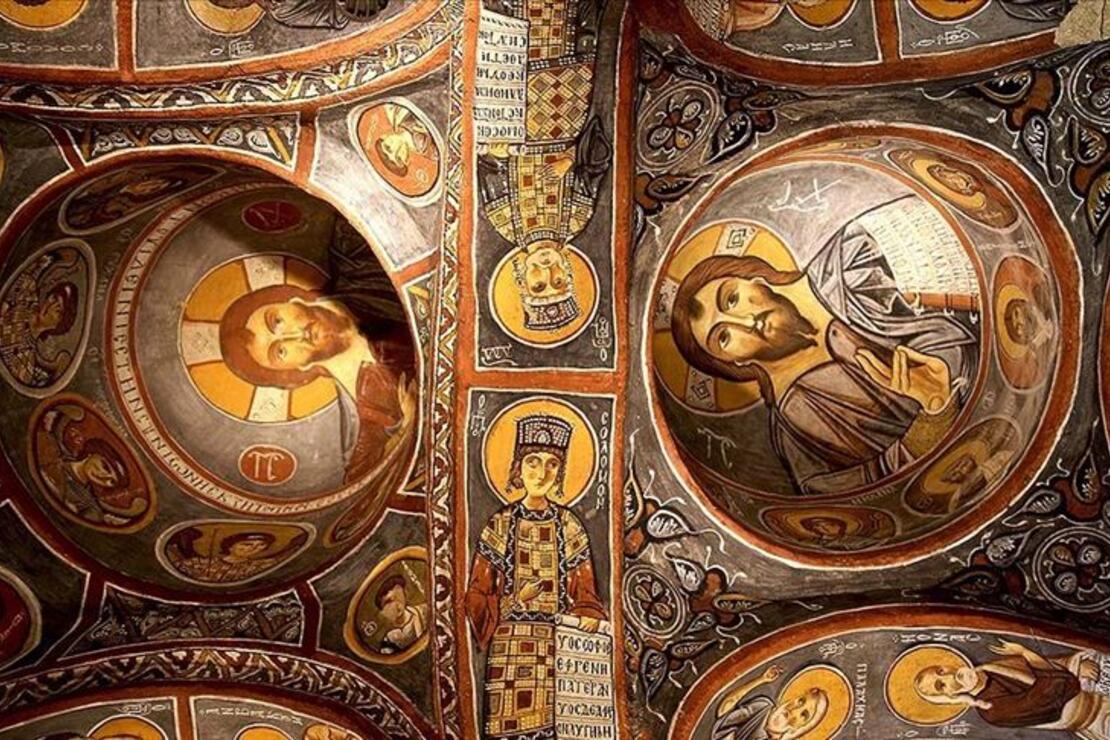
Believed to have been built at the end of the 10th century and the beginning of the 11th century, Tokalı Church is the oldest rock-cut church in this area and consists of 4 spaces: the single-nave Old Church, the New Church, the church beneath the Old Church, and the side chapel to the north of the New Church.
On its walls you can see scenes from the life of Saint Basil, depictions of many saints, and the miracles and life cycle of Jesus.
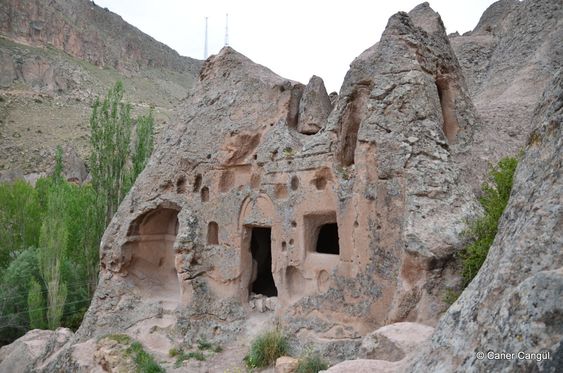
Çarıklı Church
One of the most notable features of this church is that it depicts the crucifixion of Jesus and his removal from the cross. Its similarities to the Elmalı Church and the Dark Church are another striking detail. As for the name Çarıklı (Church of the Sandals), it is thought — according to legend — to come from the footprints beneath the scene of the Ascension of Jesus.
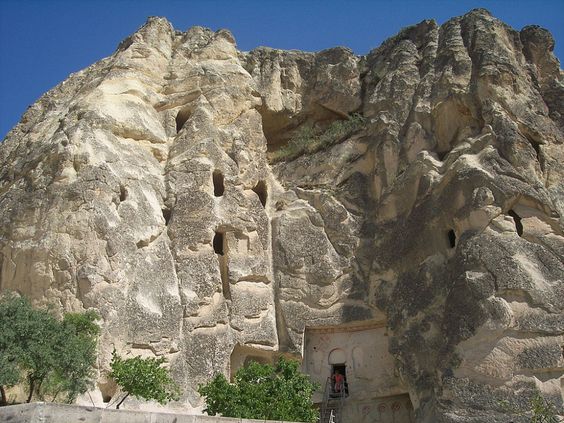
Elmalı Church
To enter the church, you must use a tunnel opening from the north side. It is estimated to have been built in the middle of the 11th century or at the beginning of the 12th century. The crosses and motifs on the walls, painted in red, are another eye-catching detail.
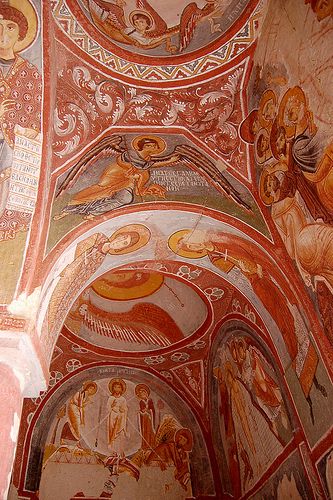
The Snake Church (Yılanlı Kilise)
The church owes its name to the wall painting of four sinners and a naked woman being attacked by snakes. The inscription of the first of these women has been destroyed, so her sin remains unknown. The second woman is bitten on the breast by snakes for not nursing her child. The third woman is bitten on the mouth for lying, and the fourth on the ears for being disobedient and defiant. The Snake Church is thought to date from the 9th century.
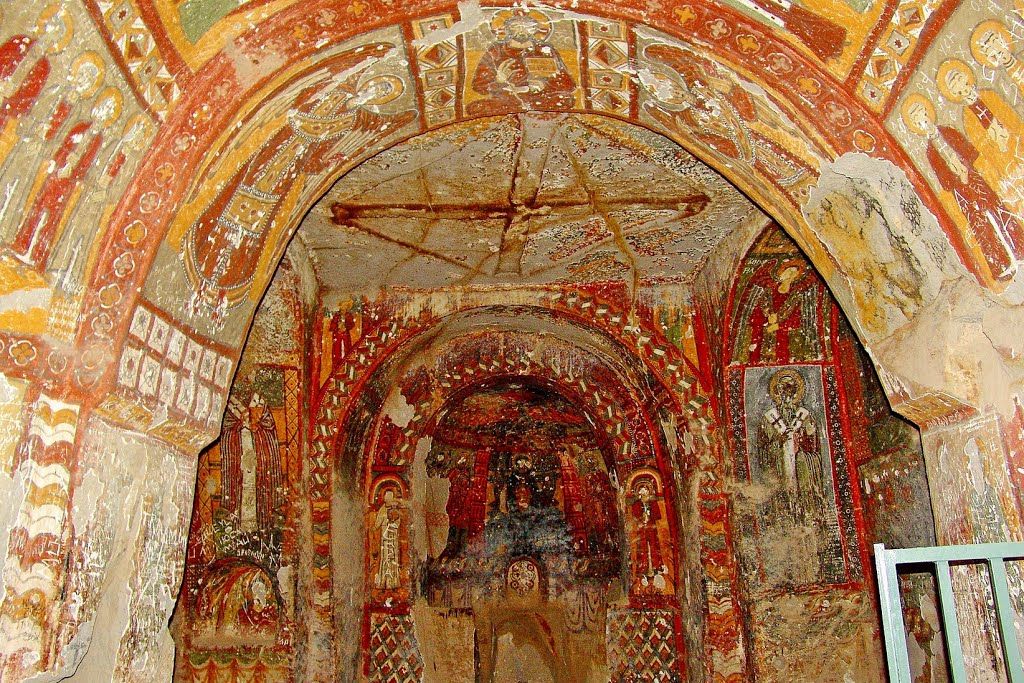
The Columned Church (Direkli Kilise)
Thanks to the inscription found in the church — “for (the salvation) of (your) servant (…donor’s name…) and the forgiveness of his sins” — “(this church) was (built or decorated) in the reign of the Emperors Basil and Constantine” — it has been established that the church was built during the reign of Emperor Basil II and Constantine VIII, that is, between 976 and 1025. The depictions of two archangels are particularly striking. We also see depictions of the Deesis, the Virgin Orans, the Virgin and Child, Zechariah, and Joachim.
The Church of the Cross (Saint Agathangelus)
The exact construction date of the church is unknown, but it is estimated that building began in the 6th or 7th century and was completed in the 9th or 10th century. It is known as the Church of the Cross because of its rectangular plan, flat ceiling, and wide single apse. Entered by way of a wooden staircase, this church offers visitors a visual feast thanks to the cross relief on its ceiling.
Church of Joachim and Anna
This is the most visited church in the area, owing to the rarity of the fresco of the Virgin Mary found inside it.
Ayvalı Church
One of the most striking frescoes in the church is the scene depicting the Virgin Mary on her deathbed. In this scene, which also includes the apostles, Jesus receives the soul of the Virgin Mary in the form of an infant emerging from her mouth. It is very difficult to determine when some of the frescoes in Ayvalı Church were painted, but the church is believed to date from the 9th century. The frescoes it contains are thought to have been made in different periods.
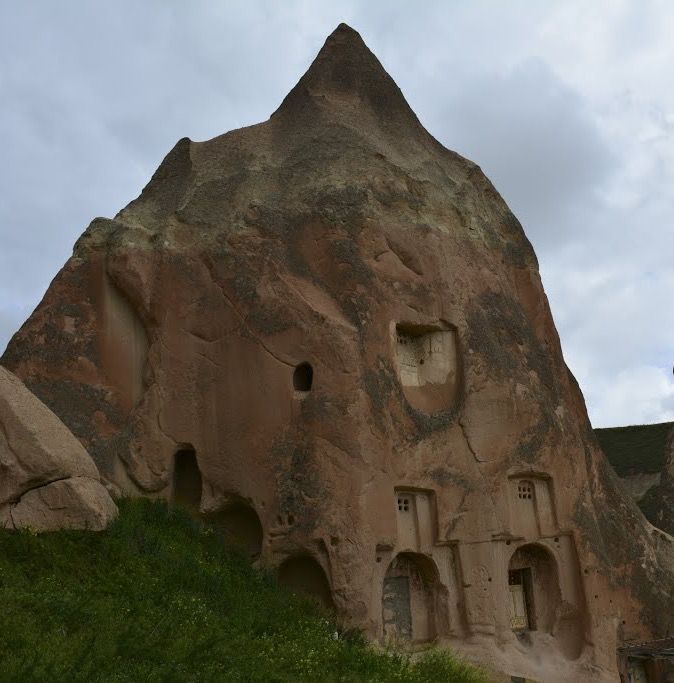
The Cistern Church (Sarnıç Kilise)
It took the name Cistern Church because it was used as a cistern for a period. You can still see the water marks inside the church. Its most beautiful features are the depictions of saints set within medallions.
It is remarkable that the frescoes that have survived to the present day are still vivid and undamaged.
El Nazar Church
It was carved into one of the fairy chimneys. Unfortunately, the floor of the church and part of the apse have been damaged. Although no precise date can be given, we know that the church dates approximately from the late 10th century.
Karabulut Church
To get into Karabulut Church, you have to climb up to its entrance. For this reason, the church has no door. Since it is difficult to enter, it is not a place people often frequent — which is why the frescoes inside have been able to survive to the present day.
The Hidden Church (Saklı Kilise)
The church is called the Hidden Church because it sits on a very steep slope and, its entrance having collapsed, it was only discovered in 1957. The paintings decorating the church catch our attention because they were painted directly onto the bare rock. Another striking feature is the highly ornate cross on its ceiling; such crosses are seen mostly in churches built in the early period. The paintings on its walls depict the Prayer Scene, the Annunciation to Mary, the Nativity of Jesus, the Presentation of Jesus at the Temple, the Commissioning of John the Baptist, the Baptism of Jesus, the Transfiguration, Jesus on the Cross, and the Death of the Virgin Mary. It has been determined that the church was built in the second half of the 11th century. This is another of the churches that must be visited in Cappadocia.
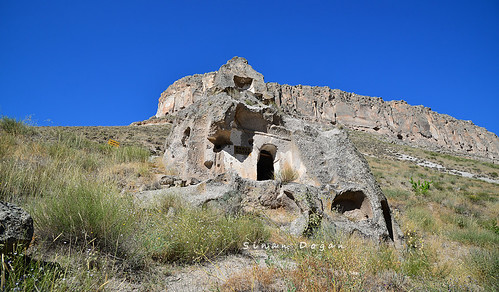
The Fish Church and the Grape Church (Balıklı and Üzümlü Kilise)
Belonging to a monastery, the Fish Church and the Grape Church are located in the third valley of Zelve. Unfortunately, their entrance sections have collapsed. The depiction at the entrance of the Virgin Mary seated on a throne with the infant Jesus in her lap is particularly striking. There are also paintings of the archangels Michael and Gabriel carrying crosses. Research has indicated that the Fish and Grape Churches date from the 10th century.
The Deer Church (Geyikli Kilise)
The notable features of this church are the relief crosses and deer depictions on its walls. Dating from the Iconoclastic period, the Deer Church is one of the most important churches in the valley.
Çavuşin Church
It is known to have been built before the birth of the Prophet Muhammad, which makes it another remarkable stop among the churches to visit in Cappadocia. Two staircases, on the right and left sides, are used to enter the church. Once inside, you can see seating sections and baptismal fonts. There are many paintings on the walls. As in some other museums, photography is prohibited in Çavuşin Church so that the paint is not damaged.
The burial section found in many churches also exists in Çavuşin Church. Small chambers were created in the names of the deceased so that visitors to the church could pray in comfort.
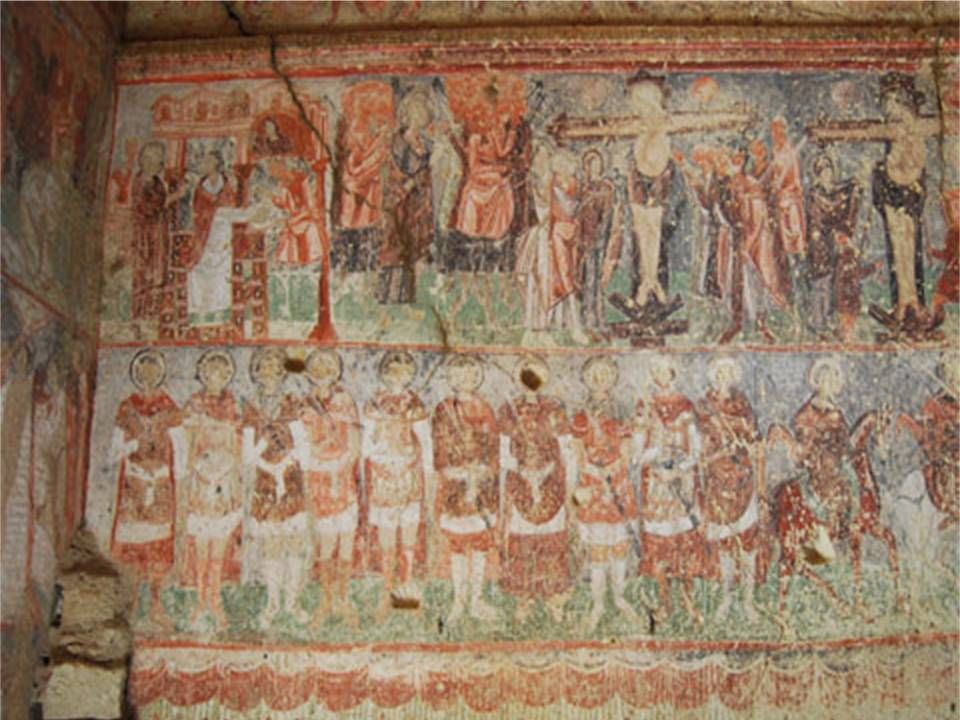
Canbazlı Church
The church takes its name from the neighborhood in which it stands. Carved into one of the rocks in the stream bed, the church is thought to have been part of a monastic settlement. There are cross motifs at its entrance, and it is believed to date from the 5th century. Its north façade is also closed.
Pancarlık Church
There is something striking about the frescoes painted on the walls of this church: unlike those in other churches, the frescoes of Pancarlık Church were painted on a green ground and are well preserved.
It was carved into a very large mass of rock, and it also stands at the highest point of the Pancarlık Valley.
The frescoes in this church depict the Annunciation, the Transfiguration, the Miracle of the Wine, and many other stories taken from the Bible.
Church of Saints Constantine and Helen (Aios Konstantinos and Eleni)
“I am the church of the most holy royal family; I, of Constantine and Helen, was built in the time of Sultan Ahmed I. I was adorned in the time of Abdülmecid I and, when the famous Paisios was bishop, I was completed in 1792 through the efforts and expenditures of the people of Sinasos. I was repaired in 1850.” These sentences are written in the inscription above the church’s entrance door. Built in 1729, during the Ottoman period, and repaired in the reigns of Sultan Ahmed and Sultan Abdülmecid, the church’s paintings have unfortunately faded and disappeared over time.
Church of Saint Basil (Aziz Vasillios)
It is also known as Ayios Vasilios or Aya Vassilios. Before its restoration the church looked like a ruin; we know it as a multi-storey monastery church carved out of the rock.
One of its most important features is that it is the only rock church built in the post-Byzantine style. It is estimated to have been built in the 19th century. The church is entered through a small room in the upper part of the valley. On the walls there are paintings of saints and apostles set within medallions. The fresco of Saint Ioannis is found only in this church.
Ağaçaltı Church
As we said, there are a great many churches to visit in Cappadocia, and another of them is Ağaçaltı Church. It serves as the church closest to the entrance of the valley, which makes it the most visited church in this area/valley.
The church is entered from the second floor, because its main entrance has been buried underground. As for its name, Ağaçaltı (“under the tree”), legend has it that in old times the church was entered through tree branches. Another source says it was called Saint Daniel, based on the fresco of the Prophet Daniel among the lions. According to an inscription inside the church, it is also said to have been known as the Pantanassa Church.
But the most remarkable point about the church is that the lion frescoes painted on its walls are not characteristic of Christian art; on the contrary, they are characteristic of Persia.
The frescoes here have been dated to the 9th–11th centuries. An inscription in the church emphasizes that the Virgin Mary is the “queen of the heavens.”
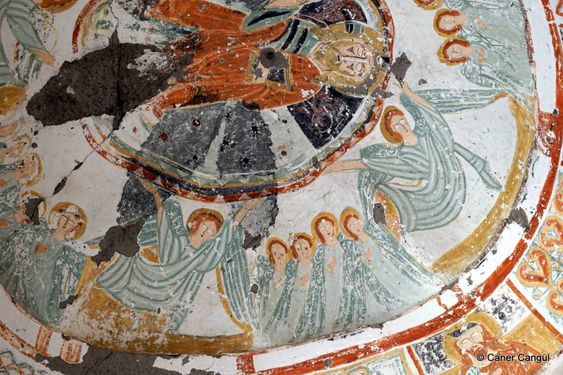
The Hyacinth Church (Sümbüllü Kilise)
It takes its name from the hyacinths that grow in the area. It is entered through a narrow window. Built on two levels into a large rock, the church is estimated to date from the 11th–12th centuries. As in all the other churches, there are many frescoes in the Hyacinth Church.
Kokar Church
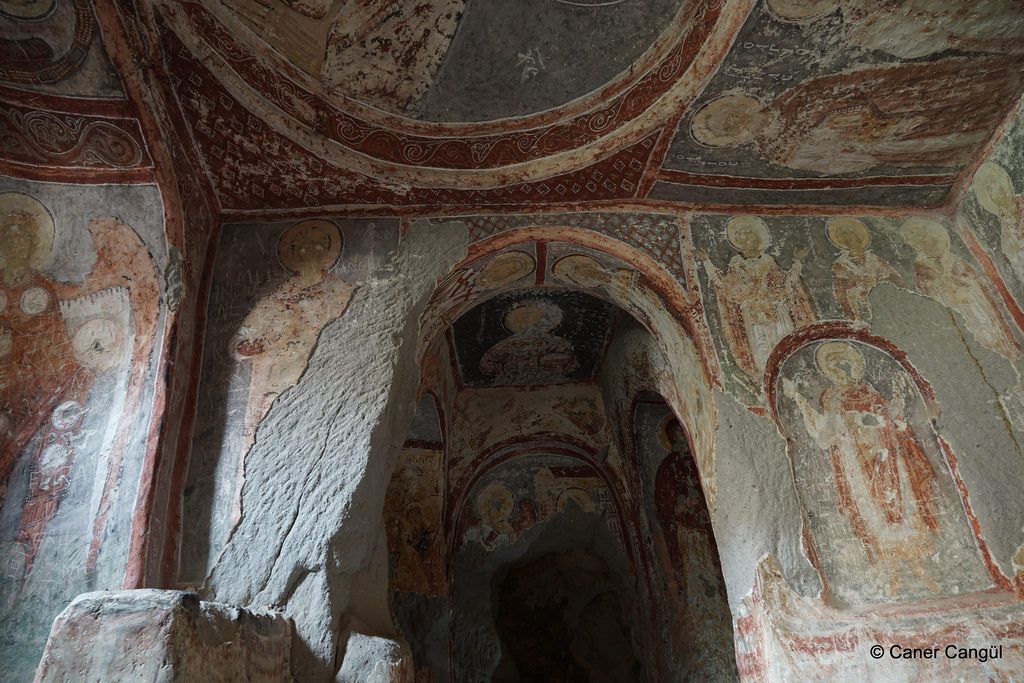
The church is known to date from the 9th century and is one of the oldest churches in the Ihlara Valley. Research has shown that the frescoes found here were painted in the second half of the 11th century.
It contains two burial chambers, and the decorations in these chambers were made with red paint.
Pürenliseki Church
The church takes its name from the heather-like plants called püren that grow in the Ihlara Valley. Besides its dark-colored frescoes, it also has a primitive style. It is estimated to have been built between the 10th and 12th centuries.
Eğritaş Church
This is another of the oldest churches in the Ihlara Valley. It was built at the end of the 9th century and the beginning of the 10th century.
Compared with the other churches in the valley, it has the largest sanctuary and burial ground in the area. It consists of two floors; on the lower floor there is an area where funeral ceremonies were held.
Church of Saint Georgeus (Kırkdamaltı)
It was built between 1283 and 1295. In addition to many stories taken from the Bible, the Seljuk Sultan Mesud II is also depicted in the church — a testament to the support Sultan Mesud II gave to its construction.
Likewise, there are six burial chambers beneath the church.
Karagedik Church
Known to the old Greeks as the Church of Saint Ermolaos, this is a large church built in the 11th century. It stands on a hill covered with grass. Unfortunately, the church has been badly battered: apart from the roof and the north walls, almost the entire church has collapsed.
Ala Church
Dating from the 11th century, this church was built with a single dome. Most of the frescoes inside have been destroyed. Even the frescoes whose stories researchers were able to decipher have since darkened and gradually disappeared.
Bezirhane Church
Bezirhane Church, which has not been able to carry its beauty fully into the present day, is located next to Ala Church. The church was used for producing linseed oil, and because of the soot from the flax and rocket herbs boiled inside it, its frescoes have unfortunately not survived to the present day.
Bahattin Samanlığı Church
The frescoes in this church were painted at the end of the 10th century and the beginning of the 11th century. Unlike the frescoes of Ala Church and Bezirhane Church, they have not been lost and have survived to the present day.
In earlier times, a villager named Bahattin who lived here used the church as a hayloft (samanlık) — which is how the church got its name.
Batkın Church (Açıkel Ağa Church)
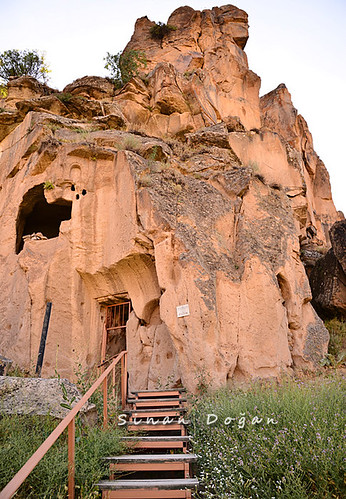
Among the churches to visit in Cappadocia, this is unfortunately the most ruined. Although the church is known to date from the 8th century, only a single remnant of it has survived to the present day.
During all these church visits, you can stay at the MDC Hotel.

