



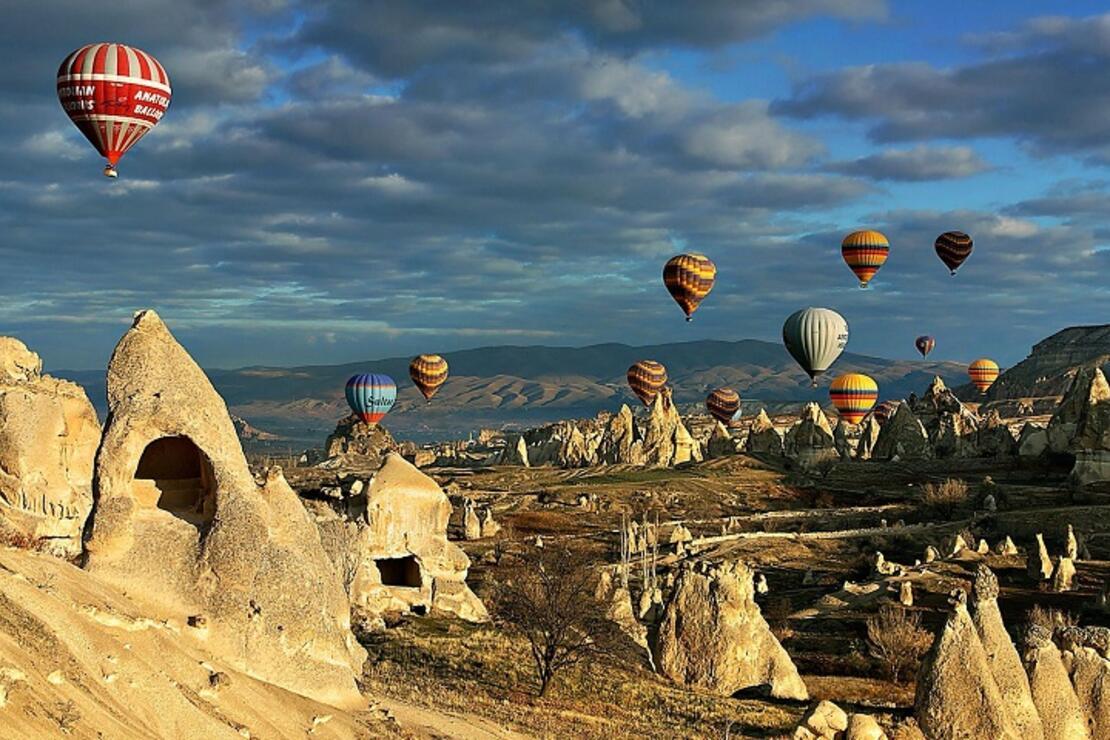
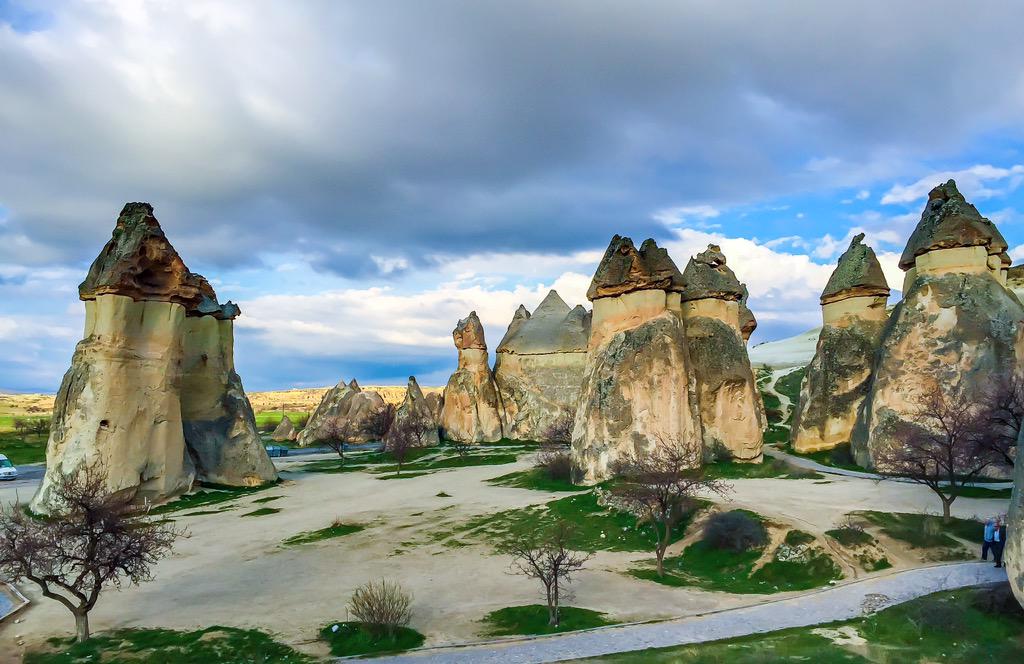
When we say Cappadocia, the first picture that comes to most of our minds is probably the fairy chimneys and the giant balloons adorning the sky. And yet the places to visit in Cappadocia are in fact far more numerous.
The Cappadocia region — formed when the soft layers created by the ash scattered and the lava spewed out by Erciyes, Güllüdağ and Hasandağı 60 million years ago were slowly worn away over countless years by the rain and the wind — is far more, and far more beautiful, than the balloons floating in its sky.
Cappadocia, which the Persians called “Kappa Tuchia”, meaning “the Land of Beautiful Horses”, plays host to thousands of tourists all year round. We have prepared an article to serve as a guide for those who have never been to Cappadocia before, or who do not know which places to see in Cappadocia but would like to find out. You can also stay at the MDC Hotel during your Cappadocia trip.
GÖREME
This region, which we also know as the Göreme National Park and which is the oldest settlement in Cappadocia, was added to the UNESCO World Heritage List in 1985. By decision of the Council of Ministers, it was declared a National Park in October 1986. About 33 years after that date (on 22 October 2019), it was removed from national park status. It goes without saying that this place, located in the volcanic region of Mount Erciyes and Mount Hasan in Central Anatolia, is a natural wonder surrounded by valleys and fairy chimneys.
The Christians who lived here between the 7th and 13th centuries adopted this place as their settlement in order to escape — or, so to speak, flee from — the oppression they faced.
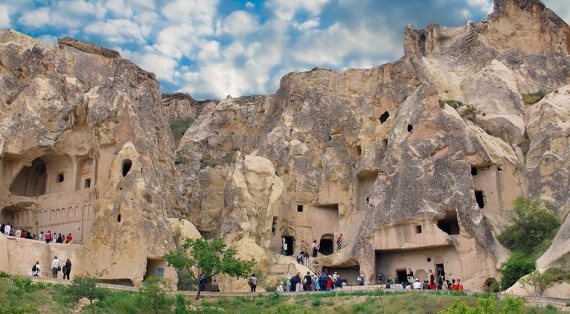
The Göreme Open Air Museum
When it comes to places to visit in Cappadocia, the most important is the Göreme Open Air Museum. The museum, which we also know as the Göreme Ruins, was regarded as a centre of learning until the 13th century. The reason for this is that Saint Basil, Bishop of Kayseri, came to the region in the 4th century AD, began to spread his teachings among the people and, before long, to train his own students, thus beginning monastic life in the valley. Göreme is known as a rock settlement, and its churches, chapels, refectories and living quarters were all created by carving into the rock. The parts of the Göreme Open Air Museum that can be visited are the Chapel of Saint Basil, the Chapel of Saint Barbara, the Monastery of the Monks and Nuns, the Dark Church, the Tokalı Church, the Çarıklı Church, the Elmalı Church and the Snake Church.
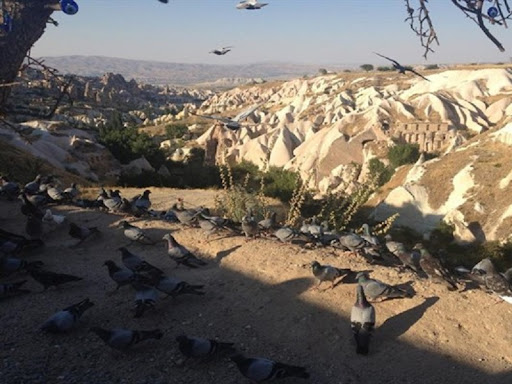
Pigeon Valley
It is known that pigeon breeding began in this area in the 9th century. The people living in the region saw that pigeon manure was extremely useful, especially for growing grapes. And so, from that day to this, pigeons have always been raised in the valley. The valley also has a waterfall, unknown to many people, that tumbles down from a height of about 15 metres. Pigeon Valley covers an area of roughly 4 kilometres, starting from Uçhisar and reaching all the way to Göreme.
Güllüdere Valley
Just as in the other valleys of Cappadocia, in the Güllüdere Valley too we come across many monasteries, churches and dwellings. Here you can enjoy outdoor pursuits such as nature walks and trekking. Along one part of the Güllüdere Valley trail, which is divided into two sections, lie the settlements where monks and priests once withdrew into seclusion. These settlements were carved into the rocks. Here you will find the Direkli Church, the Haçlı Church (the Church of Saint Agathangelus), the Church of Anna, the Ayvalı Church and the Üç Haçlı Church.
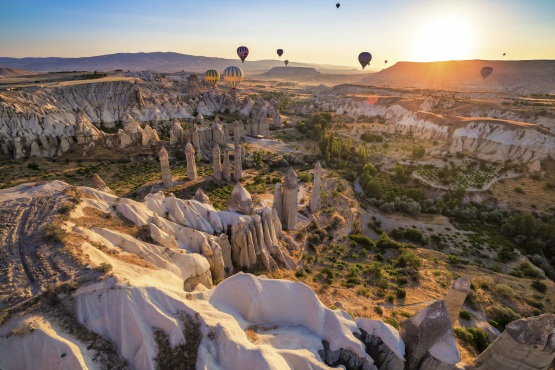
Love Valley
Many long years ago, the place we now call Love Valley was actually a village, and in this village lived ten extended families. One day a quarrel broke out between two of the families, and because of the quarrel the village split in two and its people stopped speaking to one another. One day, two villagers who were unhappy with the situation decided to take one young person from each of the two feuding sides and introduce them to each other. The moment the young pair set eyes on each other, they fell in love. Realising what had happened, the feuding villagers did everything they could to keep the young couple apart, but without success. In the end, they decided to let the young people marry. Time passed, and the couple had a child. Yet even this was not enough to reconcile the feuding families. In the end, they killed the young man. The poor girl could not bear her husband’s death and took her own life. It is said that after the death of the two lovers, God rained down stones to punish the people living in the village. These stones killed everyone who had opposed the lovers’ union. According to legend, the couple’s spirits often visit the area and talk with the children.
Such is the story of the valley known as Love Valley, Lovers’ Valley or Bağlıdere. But the story is not the only impressive thing here — so is the valley itself. It is also the most beautiful spot for those who want to take a balloon tour. With their striking silhouettes and beauty, the fairy chimneys add yet more charm to the loveliness of Love Valley.
Zemi Valley
It is one of the longest hiking trails in Cappadocia. Roughly 5,600 metres long, the Zemi Valley takes its name from the Zemi Stream that runs through it.
As you walk through the valley you will come across plum, mulberry, cherry, pear, apricot, sour cherry and hazelnut trees. Along the way you will also encounter the Sarnıç Church, the El Nazar Church and the Karabulut Church, Görkündere and the Saklı Church.
Uçhisar
Another area under the heading of places to visit in Cappadocia is Uçhisar. Perched at the summit of Cappadocia, Uçhisar is the place where the sunrise and sunset can be watched at their most beautiful. It ranks among the areas with the most magnificent views. The Turks who migrated to Anatolia in the 11th century chose this place as a settlement, but between the 12th and 14th centuries it unfortunately lost its importance. It is known to have been highly prized in its day for its strategic position, for the Persians used it on the King’s Road and the Seljuks on the Silk Road.
Famous for its castle and its view, Uçhisar owes its name to the fact that it formed the eastern frontier of the Karamanids and the western frontier of the Beylik of Kadı Burhanettin.
Uçhisar Castle
Uçhisar Castle, from which every corner of Cappadocia can be seen, commands a magnificent view. At its very top there are numerous carved storage jars, tombs and cisterns. Since Roman times, rooms, houses, shelters, storerooms, cisterns, tombs and cellars have been hollowed out inside it.
Uçhisar Castle is, in a sense, Cappadocia’s largest fairy chimney, for it consists of two pointed fairy chimneys standing side by side. Among the local people, the larger fairy chimney is called “the Agha’s Castle” and the smaller one “Çavuşin Castle”.
Cevizli
Also known by its other name, the Fairy Chimneys Stream, this spot is another ideal place for those who want to go walking. The fairy chimneys here resemble apartment blocks. The hollows carved into the fairy chimneys are used today as souvenir shops and cafés.
Tığraz Castle
It is known as the second-largest castle of Uçhisar. Built into a hillside, Tığraz Castle was constructed in 7 storeys running down the slope; it consists of storerooms and tunnels and has a fascinating architecture.
Avanos
It is the most important area of Cappadocia, especially in terms of art and tourism. Though it lies slightly outside the fairy chimneys, like the other parts of Cappadocia it is a place that must be visited and seen. Avanos is a district town, and the Kızılırmak River flows through it. Clay is obtained from the red earth the river carries into the region, and with this clay, art is created in Avanos. Avanos should be on your list of places to visit in Cappadocia.
Avanos is also famous for its wine production. Thanks to its fertile vineyards, it produces wines whose taste lingers on the palate.
Going back to antiquity, we find that Avanos was known in those days as Vanessa, Zuwinassa or Ouenesa. Its pottery workshops and ceramic-making have carried on since the time of the Hittites.
Paşabağ, the Valley of the Monks
What distinguishes this area is that in ancient times monks withdrew into seclusion here. When you go and wander around it and take in the silence and peace all about, it is impossible not to see the monks’ point.
All around there are many mulberry trees and grape vines. You may also come across people keeping bees.
The Özkonak Underground City
Although there is no definite date, it is estimated that this place was built in the 400s BC. The Özkonak Underground City was turned into a living space where food could easily be preserved, and people were also allowed to shelter here. According to information provided by archaeologists, the Özkonak Underground City was the seat of the local principalities of the Hittite period. After that it became part of the lands of the Persians, and of the Roman Empire in the Hellenistic period. The Temple of Zeus is also here. After the Roman period, the first Christians took refuge here, fleeing Byzantine oppression and Arab raids. Under the leadership of Saint Basil, the people carved into the rocks and built a city of their own.
The Avanos Hair Museum
It ranks 6th on the list of “The World’s 15 Most Interesting Museums” published by the American site ABCNews.com. The museum has also entered the Guinness Book of Records. Of all the places to visit in Cappadocia, this is the most curious and striking.
So what is it that makes the Avanos Hair Museum so interesting?
It all began with a love story. A French woman came to the workshop of the museum’s owner, the master potter Galip Körükçü. With every passing day, the emotional bond between Master Galip and the French woman grew stronger. About 3 months later, before returning to her country, the French tourist wanted to give Master Galip a gift to remember her by, and presented him with a lock of her own hair. Master Galip hung the lock of hair on the wall. Women who heard the story of the lock of hair on the wall came to the workshop and donated locks of their own hair. And so the Hair Museum came into being.
Some time later the French woman returned, and was stunned by the sight that met her. However hard she searched, she could not find her own lock of hair. It is said that Master Galip hid the French woman’s lock of hair in a place known only to himself.
To this day, when Avanos is mentioned, the first place that comes to mind is the Hair Museum.
The names, surnames and addresses of the women who donated their hair to the museum are attached to the locks. To protect this personal information, taking photographs in the museum is forbidden.
The Zelve Open Air Museum
It is home to many fairy chimneys with pointed tips and broad bodies. The churches within the museum also add to the value of the place. The craftsmanship worked into the houses of the Zelve Open Air Museum is nothing short of a masterpiece. The features of the Balıklı Church, the Üzümlü Church and the Geyikli Church are also beautiful enough to be well worth seeing.
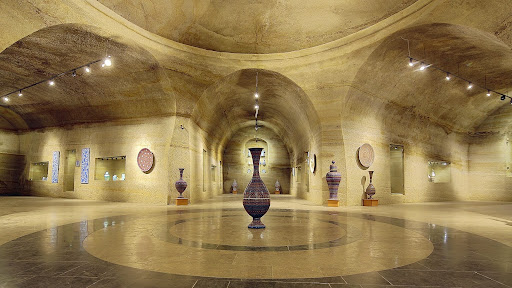
The Underground Ceramics Museum — Güray Museum
Everyone knows that the Avanos area of Cappadocia has had a pottery tradition since the time of the Hittites. This craft, passed down from father to son, is one of the greatest treasures that make Avanos so precious.
Founded in the spirit of modern museology, the Güray Museum, located within the district of Avanos, is the largest museum in the region. Inside it there are social event spaces, exhibition halls and many other facilities.
It was carved out of an area of about 1,600 square metres, 20 metres below ground. It is the first and only underground museum in the world.
It consists of three sections: the Hall of Ancient Works, the Hall of Modern Works and the Exhibition Hall.
While the museum welcomes visitors during the day, in the evening hours it hosts seminars, dinner meetings, dance performances, whirling dervish ceremonies, concerts and many other events in the special hall set aside for this purpose. It has the capacity to serve around 400 people.
Güray Ceramics and Pottery has been carrying out its work here since 1843, and gives us a magnificent demonstration of what pottery truly is.
Ürgüp
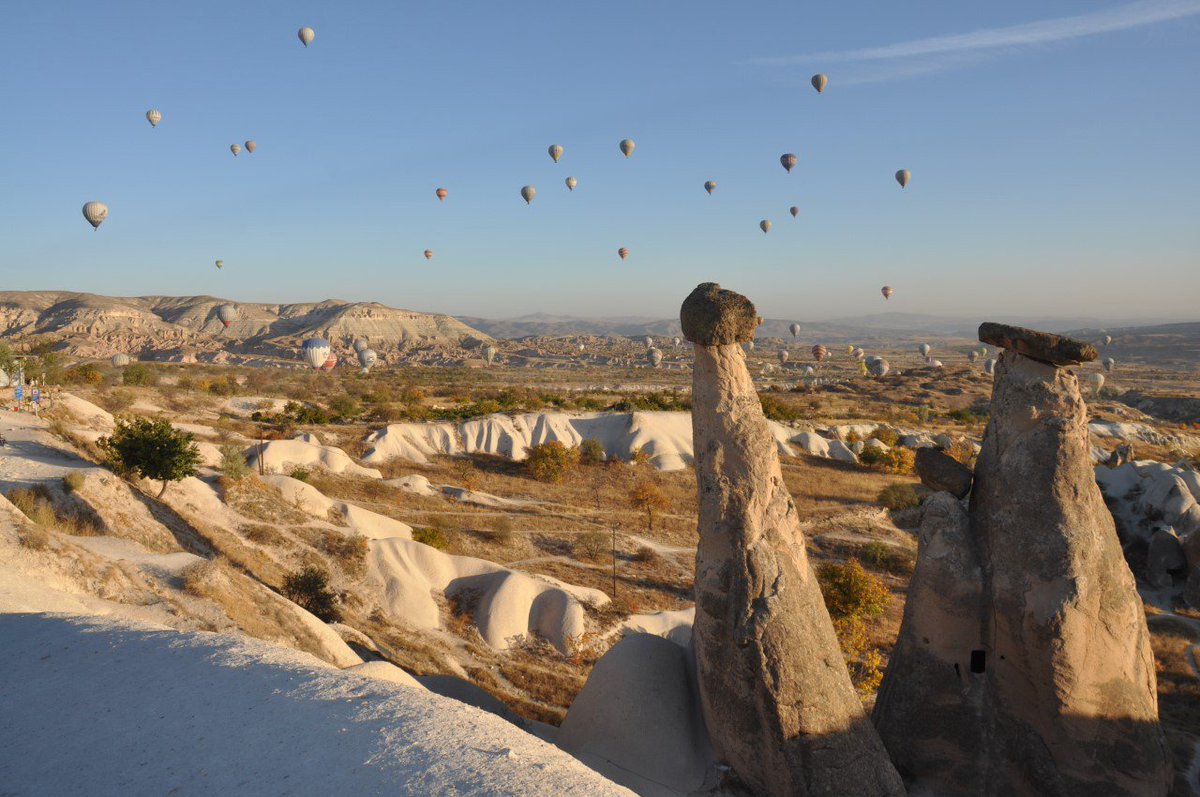
Another of the places to visit in Cappadocia is Ürgüp. It is the largest settlement in Cappadocia and possesses the three magnificent fairy chimneys we call the Three Beauties.
It carries great significance because it was a religious centre in the Byzantine period. It has been home to the Byzantines, the Romans, the Seljuks and the Ottomans.
It is also the most active part of Cappadocia when it comes to nightlife. In Ürgüp, which is full of wine houses, there are also granaries carved out of the rock.
The Three Beauties
According to legend, a king who lived long, long ago had a daughter of unearthly beauty. But the girl and a shepherd came to feel a very great love for each other. Believing that “the great king’s beautiful daughter cannot fall in love with a shepherd”, the king would not allow them to marry. Yet the love between the shepherd and the girl was so great that the king’s daughter ran away with him. As time went by, the couple had the sweetest of children. The shepherd and the girl thought the king would forgive them once he saw his grandchild, and so they set out for the palace. Sadly, before this lovely family could even step through the palace gate, they were met with the king’s wrath. The king harboured such great fury within him that he ordered his soldiers to kill them. Knowing they would die once they were caught, the girl prayed to God: “show us a miracle and deliver us from this torment”. God accepted the girl’s prayers and turned them to stone.
The fairy chimneys we call the Three Beauties consist of two large fairy chimneys and one small one — that is, a mother, a father and a child.
This is the most photographed spot in Cappadocia. What sets the Three Beauties apart from the other fairy chimneys is that they wear caps of rock.
The Ürgüp Museum
Located on Temenni Hill, the Ürgüp Museum is a single-domed building. The museum opened its doors to visitors in 1971.
At the entrance of the museum, a 10-million-year-old female mammoth fossil, found during excavations at Mustafapaşa, is on display.
In the museum’s exhibition hall, handmade artefacts from the old Bronze Age and the Hellenistic and Roman periods are on show.

