



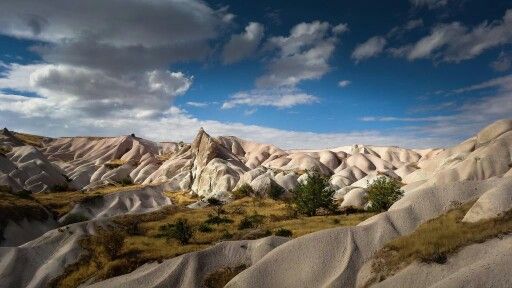
The Zemi Valley in Cappadocia is one of the longest hiking trails in the region. Roughly 5,600 metres long, the Zemi Valley in Cappadocia takes its name from the Zemi Stream that runs through it. It contains many Roman tombs.
As you walk through the valley you will come across plum, mulberry, cherry, pear, apricot, sour cherry and hazelnut trees. Along the way you will also encounter the Sarnıç Church, the El Nazar Church and the Karabulut Church, Görkündere and the Saklı Church.
You can also stay at the MDC Hotel during your Zemi Valley or Cappadocia trip.
The Sarnıç Church
It is called the Sarnıç (Cistern) Church because it was used as a cistern for a time, and you can still see traces of water inside. The church’s most striking features are the depictions of saints set within medallions. Located 200 metres beyond the Karabulut Church, it is one of the churches that must be seen in the Zemi Valley.
It is remarkable that the frescoes that have survived to the present day are still vivid and undamaged.
The El Nazar Church
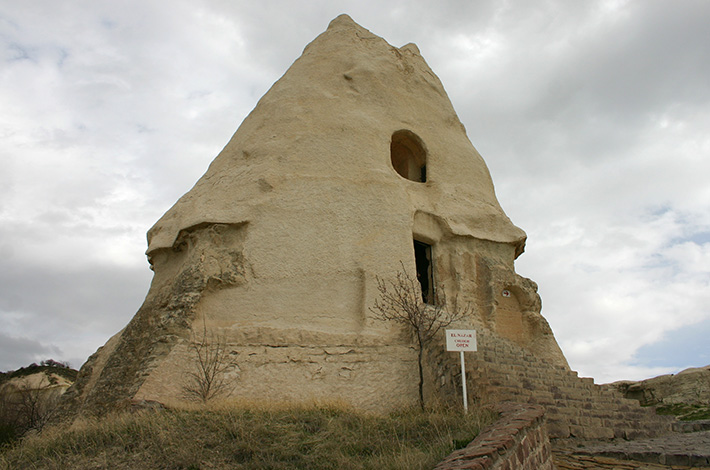
The Zemi Valley is also home to the El Nazar Church. It was carved into one of the fairy chimneys. Unfortunately, the floor of the church and part of the apse have been damaged. Although no exact date can be given, the church is thought to date from the late 10th century. It lies about 800 metres from the Göreme Open Air Museum. The scenes inside the church are also arranged in chronological order.
The Karabulut Church
To get into the Karabulut Church you have to climb up to where its entrance is. For this reason the church has no door, and because it is difficult to enter, it is not a place people often visit. That is also why the frescoes inside have survived to the present day.
The Saklı Church
The church is called the Saklı (Hidden) Church because it stands on a very steep slope and, its entrance having collapsed, it was only discovered in 1957. The paintings decorating the church catch our attention because they were drawn directly onto the bedrock. Another striking feature is the highly ornate cross on its ceiling; such crosses are found mostly in churches built in the early period. The paintings on its walls depict the Prayer Scene, the Annunciation to Mary, the Nativity of Jesus, the Presentation of Jesus at the Temple, the Commissioning of John the Baptist, the Baptism of Jesus, the Transfiguration, Jesus on the Cross and the Dormition of Mary. It has been established that it was built in the second half of the 11th century. In this church, where the colour red predominates, we also come across the architectural style of Mesopotamian churches. It is another precious church to see in the Zemi Valley.

