


The Fairy Chimneys
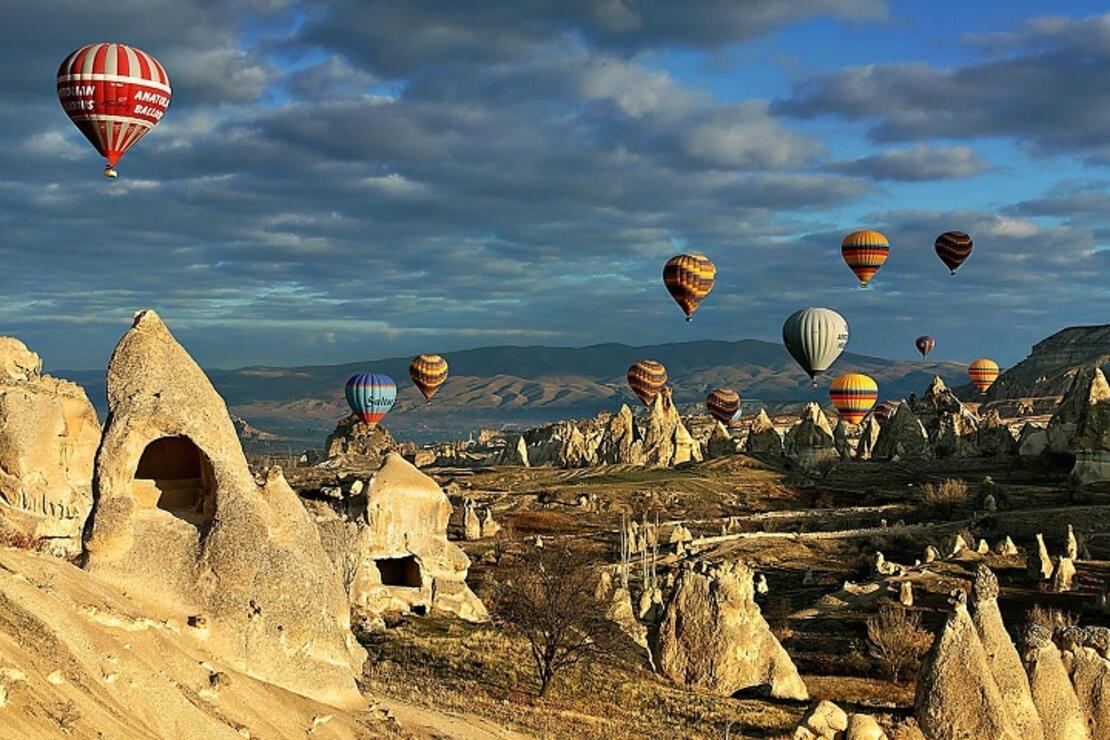
As everyone knows, Cappadocia is famous for its fairy chimneys. So how were the fairy chimneys formed, and why do we call these places fairy chimneys?
Many long years ago — or rather, in the earliest times — Cappadocia was in fact an inland sea. Millions of years ago Mount Erciyes, Güllüdağ and Mount Hasan spewed out lava; that lava and ash dried up the sea, and tuff formations came into being. When erosion joined the floods, rain and fierce winds they were exposed to for years, the rock began to wear away, and so the fairy chimneys were formed. Houses, churches, monasteries and chapels were carved into the fairy chimneys, and for many long years these places became people’s houses and homes.
The area where the fairy chimneys are most concentrated could be said to be the Göreme National Park. As for the name, it comes from the belief that fairies lived in these places. There is even a legend told about this.
“Many long years ago there lived a hard-working villager in Göreme. Grapes grew in abundance in his vineyards. With the weariness and old age the years had brought, he could now only just manage the work he once handled with ease. One year the harvest came early to his field, but he could not find the strength in himself to get the work done quickly. He sat down at the foot of a fairy chimney and began to brood: ‘I have put so much labour into this place — what if the birds eat what I have worked for, what if the wind blows it all away?’ he said. While the poor man was worrying over these thoughts, a host of fairies came out of the fairy chimneys with torches in their hands and took care of all his work. When the work was done, they vanished. At first the man thought he had been dreaming, but then he came to believe that all this was a reward for his diligence.
The old man’s neighbours could not understand how someone so old and frail had managed to get his work done in so short a time. Sadly, the old man passed away, and his neighbours never learned the secret.”
The Three Beauties
According to legend, a king who lived long, long ago had a daughter of unearthly beauty. But the girl and a shepherd came to feel a very great love for each other. Believing that “the great king’s beautiful daughter cannot fall in love with a shepherd”, the king would not allow them to marry. Yet the love between the shepherd and the girl was so great that the king’s daughter ran away with him. As time went by, the couple had the sweetest of children. The shepherd and the girl thought the king would forgive them once he saw his grandchild, and so they set out for the palace. Sadly, before this lovely family could even step through the palace gate, they were met with the king’s wrath. The king harboured such great fury within him that he ordered his soldiers to kill them. Knowing they would die once they were caught, the girl prayed to God: “show us a miracle and deliver us from this torment”. God accepted the girl’s prayers and turned them to stone.
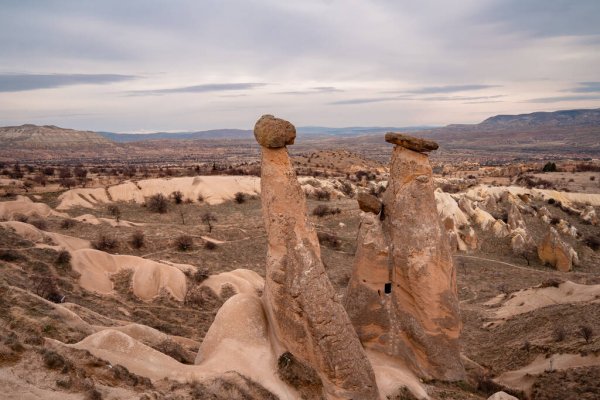
The fairy chimneys we call the Three Beauties (Üç Güzeller) consist of two large fairy chimneys and one small one — that is, a mother, a father and a child.
This is the most photographed spot in Cappadocia. What sets the Three Beauties apart from the other fairy chimneys is that they wear caps of rock.